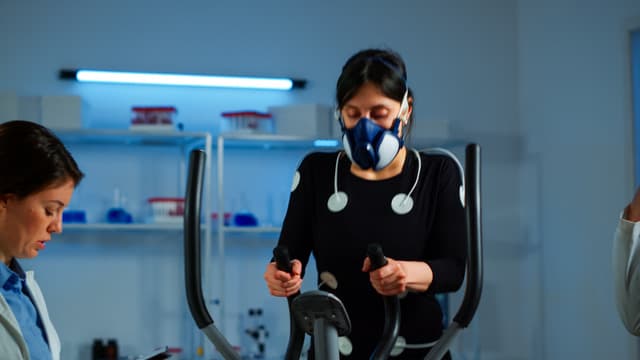
The EMD&T Fellowship Curriculum
The AEM is committed to developing a competency-based curriculum and associated assessment tools reflecting knowledge and skills related to Exercise Medicine, Diagnostics, and Therapeutics, based on input from experts across medical disciplines.
Fellowship Overview
The EMD&T fellowship is a minimum 1-year training program beyond core specialty residency, designed for physicians who want to develop advanced competencies in exercise diagnostics, therapeutics, and scholarship.
The fellowship uses a competency-based progression model built on 6 Entrustable Professional Activities (EPAs), moving trainees from observation through supervised practice to independent clinical competence. This approach allows for innovative training models including part-time distribution over multiple years, blended pathways with overlapping competencies, and integrated research degrees.
The program is open to physicians who have completed or are completing core residency training in internal medicine, pediatrics, family medicine, or physical medicine and rehabilitation, as well as their subspecialties.
6 Entrustable Professional Activities
The fellowship curriculum is built on 6 EPAs that define the competencies trainees must achieve, with a 5-level supervision scale from direct observation to unsupervised independent practice.
Design & Oversee Clinical Exercise Evaluation
Select, conduct, interpret, and report standardized exercise assessments including CPET, muscle strength tests, and physical performance evaluations.
Laboratory Organization & Technical Operations
Engage in the organization, technical operations, and quality control of clinical exercise and physical performance laboratories.
Exercise Medicine Consultation
Provide clinical consultation to other medical professionals regarding exercise capacity, limitations, risks, and intervention options.
Exercise Prescription in Health & Disease
Provide exercise prescriptions for training or rehabilitation across a range of diseases and pathophysiology, as well as general health maintenance.
Expert Advisor & Advocate
Serve as an expert advisor on exercise within healthcare institutions and in community-based environments and programs.
Scholarship in EMD&T
Demonstrate scholarship through research, teaching, quality improvement, and evidence-based clinical practice.
Supervision Scale: Each EPA uses a 5-level entrustment scale — (1) Observation only → (2) Direct supervision → (3) Indirect supervision → (4) Oversight with autonomous execution → (5) Unsupervised independent practice. Progression is competency-based, not time-based.
Eligible Entry Specialties
EMD&T draws from a large pipeline of trainees across multiple core specialties and subspecialties. Recent enrollment numbers demonstrate the scale of potential applicants.
| Specialty | Recent Enrollment |
|---|---|
| Physical Medicine & Rehabilitation | 532 |
| Pulmonary Disease (Internal Med) | 777 |
| Pulmonary Disease (Pediatric) | 177 |
| Cardiovascular Disease (Internal Med) | 1,108 |
| Pediatric Cardiology | 462 |
| Endocrinology | 349 |
| Family Medicine | 4,511 |
Source: ACGME Table 5, recent academic year enrollment
Complements Existing Programs
EMD&T does not replace existing subspecialties — it fills a gap that none currently address. The table below shows how it integrates with programs your institution may already run.
Institutions Developing EMD&T Programs
16 academic medical centers are actively developing fellowship programs with the Academy's curriculum framework and organizational support.
Beth Israel-Deaconess
Jeremy Robbins, MD
Boston Children's Hospital
Dawn Ericson, MD, Naomi Gauthier, MD
Cedars-Sinai Medical Center
Nicolas Musi, MD
Duke University
William Kraus, MD, Brian Coyne, MEd
Harbor-UCLA
William Stringer, MD, Kathy Sietsema, MD
Mayo Clinic
Alex Niven, MD, Michael Joyner, MD
Northwestern University
Kendra Ward, MD, Peter Koenig, MD
Oregon Health Sciences University
Jennifer Huang, MD
UCI CHOC Children's
Dan M. Cooper, MD, Dawn Lombardo, DO
University of Cincinnati
Adam Powell, MD
University of Florida
Kevin Vincent, MD, PhD, Heather Vincent, PhD
University of Illinois, Chicago
Cemal Ozemek, PhD
UT Southwest
Katie Barnes, MD
University of Utah
Matt Hegewald, MD
University of Minnesota
William Roberts, MD
University of Colorado
Wendy Kohrt, PhD